

Reading time: 3 Minutes
The Giants of the Seas: Why Container Ships Keep Global Trade Running
When we order something online today, we rarely think about the journey that product has taken. One click, a few days of waiting – done. But behind this seemingly simple process lies a highly complex system. And right at the center of it: container ships. Massive steel giants that move across the world’s oceans like floating cities, making global trade possible in the first place.
From Breakbulk to System: How Containers Changed the World
In the past, logistics was one thing above all: complicated. Goods were loaded individually, repacked, documented, and unloaded again. A logistical nightmare that cost time, money, and nerves. The turning point came with the introduction of the standardized container in the 1950s. Suddenly, everything fit into a uniform box. Whether clothing, machine parts, or electronics – everything could be packed, stacked, and transported efficiently. The result: drastically reduced loading times, fewer damages, and lower costs. The foundation of what we now know as the globalized economy.
Floating Highways of Global Trade
Today, container ships are the backbone of international trade. Around 90 percent of global goods are transported by sea – a large share of it in containers. Without these ships, our economic system simply wouldn’t work. The routes they travel resemble global highways: from Asia through the Suez Canal to Europe, from North America to South America, or across the Pacific Ocean. Ports such as Shanghai, Rotterdam, and Los Angeles serve as key hubs – central nodes where goods from all over the world converge.
Size Matters
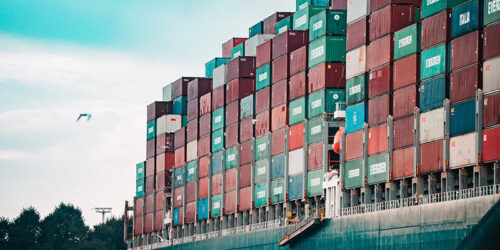
Anyone who has never seen a modern container ship can hardly imagine their scale. The largest ships in the world are over 400 meters long and can carry more than 20,000 containers. If you lined up those containers, they would stretch for several hundred kilometers. These enormous capacities ensure that transport costs per unit remain extremely low. That’s one of the main reasons why products from around the world are widely available and affordable. Cars from Germany, smartphones from China, or spare parts from the United States – without container ships, many of these products would hardly be accessible.
Efficiency Meets Complexity
As impressive as their size is, the organization behind them is just as demanding. A container ship doesn’t simply set sail and unload goods somewhere. Every route is meticulously planned. Containers must be precisely stowed to ensure the ship’s stability. Supply chains need to be perfectly coordinated, ports must provide capacity, and customs processes must run smoothly – all under time pressure. Because delays quickly ripple through entire supply chains. Especially after the global supply chain disruptions of recent years, one thing has become clear: when a ship is stuck somewhere or a port is overloaded, the impact is felt by businesses and consumers worldwide.
Sustainability: The Big Challenge
Despite all their efficiency, container ships are increasingly under scrutiny. International shipping accounts for a significant share of global CO₂ emissions. At the same time, pressure is growing to find more sustainable solutions. The industry is working hard on this. New propulsion technologies and alternative fuels such as LNG, methanol, and even hydrogen are being tested. Optimizing routes and speeds also plays a role in reducing emissions. It’s a balancing act: on the one hand, global trade must remain efficient; on the other, environmental impact needs to be minimized. The good news is that progress is being made – even if there is still a long way to go.
More Than Just Transport: Container Ships as an Economic Driver
Container ships don’t just move goods – they drive entire economies. Countries with strong access to international shipping routes have clear competitive advantages. Ports create jobs, strengthen infrastructure, and attract businesses. For logistics companies like Skyline Express, container ships are a key part of daily operations. They enable us to transport goods reliably across long distances and manage global supply chains efficiently. And it’s no longer just about moving goods from A to B. It’s about smart solutions, flexibility, and the ability to respond quickly to change. Because global trade is dynamic – and demands are constantly evolving.
A Look into the Future
What does the future of container shipping look like? One thing is certain: it will become more digital, more sustainable, and more interconnected. Automated ports, intelligent container systems, and data-driven logistics processes will play an increasingly important role. At the same time, one thing remains unchanged: the importance of container ships for global trade. They are and will remain the heroes of our economy – even if we rarely notice them in everyday life. Container ships are therefore far more than just large vessels. They are the foundation of our global economic system. They connect markets, enable trade, and ensure that products from all over the world find their way to us. The next time you place an online order, it might be worth pausing for a moment: somewhere out there, on the world’s oceans, a ship is on its way – loaded with products just like yours. And without that journey, our daily lives would look very different. Do you have questions about sea freight or our logistics solutions? We would be happy to advise you personally.
Mit Skyline Express erreichen Sie Ihre Ziele.
Ob Seefracht, Luftfracht, Landverkehr oder komplexe Logistiklösungen – unser Team sorgt für reibungslose Abläufe, schnelle Transporte und volle Transparenz entlang der gesamten Lieferkette. Vertrauen Sie auf Erfahrung, Dynamik und digitale Effizienz.
